.
After the visit to Baytown Nature Center described in my previous post, I popped in at Thompson's Bait Camp to check out the birds there.
Unlike on my previous visit, this time there were no Red-breasted Mergansers, Buffleheads, Common Goldeneyes or Horned Grebes.
There were Laughing Gulls a-plenty: Hundreds were floating on the bay or standing on jetty posts or bathing in the shallows.
There were also quite a few Ring-billed Gulls.
I'm not good with IDing gulls and I spent a few minutes trying to turn various young birds into Lesser-black-backed Gulls. Unfortunately, they all turned out to be young Ring-billed Gulls.
The jetty posts also had a few Neotropic Cormorants, busy preening.
As always at this site, there were several Brown Pelicans too.
My final sighting was of an American White Pelican that floated majestically past the bait camp.
I suppose I'll visit the bait camp again before too long in hopes of finding one of the more exotic gulls that other birds keep reporting there. Or maybe I'll just accept that I really am hopeless at identifying gull species!
.
Jeff Mohamed blogs about birds and other wildlife in the Houston area - and occasionally farther afield.
Monday, January 19, 2015
Saturday, January 17, 2015
Another Cold Morning by the Sea
.
Saturday morning I spent a couple of hours at Baytown Nature Center. For most of my time there the weather was miserably cold and gray, the kind of conditions that make photography difficult and that keep most sensible birds hunkered down out of sight.
Surprisingly, the birds that appeared in the largest numbers were Hooded Mergansers. I saw a total of 18 males and females.
One group of Mergansers was accompanied by a Common Goldeneye.
Several Blue-winged Teal, some Gadwalls and a Common Loon were all too distant for photos but one of two Horned Grebes came a little nearer to the shore.
Belted Kingfishers spook easily and I only got one mediocre photo of one of three Kingfishers I passed on my walk.
I was too slow to photograph two Northern Harriers that were out hunting. However, a third posed for a moment on a tree not too far from the path.
The weather brightened up as I was leaving and I stopped to admire a Snowy Egret that was pacing around in one of the ponds.
A Great Egret and a Great Blue Heron were hanging out at the edge of the same pond.
As my two hours of birding hadn't been too successful, I decided to head over to the Thompson Bait Camp to see if I could spot any of the interesting gulls that had been reported from there.
.
Saturday morning I spent a couple of hours at Baytown Nature Center. For most of my time there the weather was miserably cold and gray, the kind of conditions that make photography difficult and that keep most sensible birds hunkered down out of sight.
Surprisingly, the birds that appeared in the largest numbers were Hooded Mergansers. I saw a total of 18 males and females.
One group of Mergansers was accompanied by a Common Goldeneye.
Several Blue-winged Teal, some Gadwalls and a Common Loon were all too distant for photos but one of two Horned Grebes came a little nearer to the shore.
Belted Kingfishers spook easily and I only got one mediocre photo of one of three Kingfishers I passed on my walk.
I was too slow to photograph two Northern Harriers that were out hunting. However, a third posed for a moment on a tree not too far from the path.
The weather brightened up as I was leaving and I stopped to admire a Snowy Egret that was pacing around in one of the ponds.
A Great Egret and a Great Blue Heron were hanging out at the edge of the same pond.
As my two hours of birding hadn't been too successful, I decided to head over to the Thompson Bait Camp to see if I could spot any of the interesting gulls that had been reported from there.
.
Tuesday, January 13, 2015
Brazos Bend in Late December
.
Just before the end of December we took our daughter and grandsons down to Brazos Bend State Park, mainly so that the kids would see alligators.
It was a cold, gray day and so we visited only 40 Acre Lake. Apart from some Cormorants and American Coots (below), there were no birds out on the water.
A solitary White Ibis was grazing in the wetland area beside the path.
Nearby was a single White-faced Ibis.
A Blue-gray Gnatcatcher was one of only a handful of songbirds that we saw.
They were even more excited when the gator stood up and walked slowly across the path and slid into the lake.
P.S.
After our lakeside walk and a picnic lunch, we went to the Visitor Center. The volunteer staff there are always great with kids and this time they let our grandsons handle two baby alligators and a large Speckled Kingsnake. This more than made up for the comparative lack of wildlife around 40 Acre Lake.
.
Just before the end of December we took our daughter and grandsons down to Brazos Bend State Park, mainly so that the kids would see alligators.
It was a cold, gray day and so we visited only 40 Acre Lake. Apart from some Cormorants and American Coots (below), there were no birds out on the water.
Worse still, there was only a single alligator in view, and it was far out from the path.
A Great Egret was munching on a crawdad but this, too, was so far away that the kids could hardly see it.
A Snowy Egret was rather closer.
A solitary White Ibis was grazing in the wetland area beside the path.
Nearby was a single White-faced Ibis.
A Blue-gray Gnatcatcher was one of only a handful of songbirds that we saw.
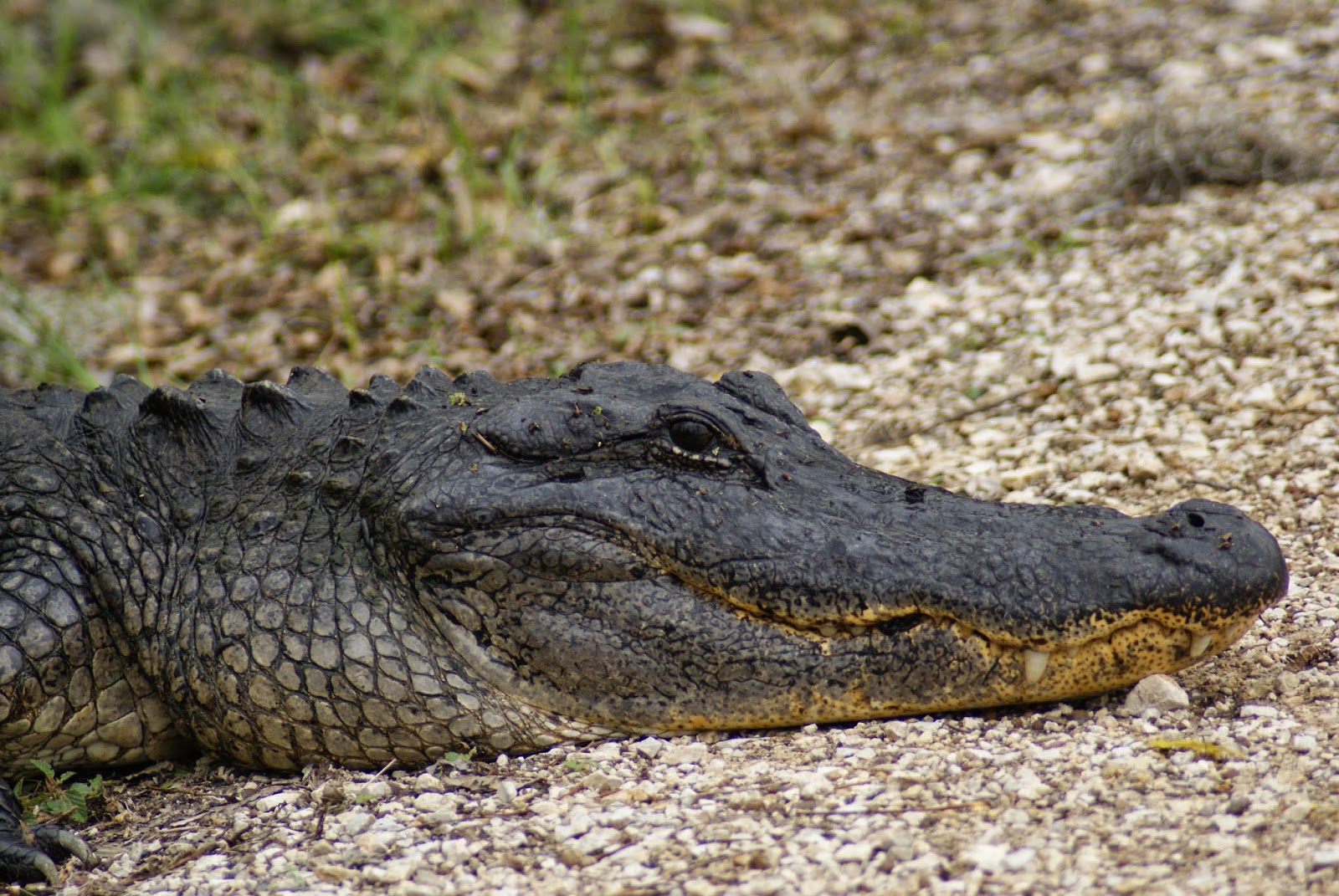
As we neared the end of the trail around the lake, I was beginning to regret that we'd come to the park. However, a visit to Brazos Bend always turns up at least one exciting sighting and this visit was to be no exception. The kids were very excited when we came across a large alligator resting on the edge of the path.
They were even more excited when the gator stood up and walked slowly across the path and slid into the lake.
P.S.
After our lakeside walk and a picnic lunch, we went to the Visitor Center. The volunteer staff there are always great with kids and this time they let our grandsons handle two baby alligators and a large Speckled Kingsnake. This more than made up for the comparative lack of wildlife around 40 Acre Lake.
.
Saturday, January 10, 2015
This Week at CyFair
.
I was hoping that the colder weather would bring lots of winter birds onto the campus but this doesn't seem to have happened, at least so far.
One reason why we don't have as many birds as we used to is habitat destruction, with more of the campus been devoured by parking lots each year.
Another reason is that ducks and other water birds now largely shun our two retention ponds in favor of the much larger one in the new Precinct 3 park just across Barker Cypress Road. So if I want to see birds such as Ruddy Duck, Ring-necked Duck and Lesser Scaup (below), I now have to go over to the park.
The photos below show a selection of the birds I've seen on the campus this week.
Unfortunately, I haven't yet managed to photograph the flock of Cedar Waxwings that moved in over the holidays. I hope to get some photos of these beautiful birds in the next few days. I also hope that the flock will keep increasing until it reaches the size (1000+ birds) that it reached last winter and the one before that.
.
I was hoping that the colder weather would bring lots of winter birds onto the campus but this doesn't seem to have happened, at least so far.
One reason why we don't have as many birds as we used to is habitat destruction, with more of the campus been devoured by parking lots each year.
Another reason is that ducks and other water birds now largely shun our two retention ponds in favor of the much larger one in the new Precinct 3 park just across Barker Cypress Road. So if I want to see birds such as Ruddy Duck, Ring-necked Duck and Lesser Scaup (below), I now have to go over to the park.
The photos below show a selection of the birds I've seen on the campus this week.
Black Vulture
American Robin
European Starling
Loggerhead Shrike
White-winged Dove
Unfortunately, I haven't yet managed to photograph the flock of Cedar Waxwings that moved in over the holidays. I hope to get some photos of these beautiful birds in the next few days. I also hope that the flock will keep increasing until it reaches the size (1000+ birds) that it reached last winter and the one before that.
.
Wednesday, January 07, 2015
Cold at the Coast
.
On Sunday we headed down to Galveston because we had promised our grandsons a boat ride. It was bitterly cold on the Bolivar ferry but the Laughing Gulls and Forster's Terns provided plenty of entertainment. While most of the gulls concentrated on trying to catch the bread and chips being thrown from the stern of the ferry by children, some focused instead on catching fish churned up in the boat's wake.
Our fellow passengers included Rock Pigeons and Great-tailed Grackles (below).
The landing area at Bolivar had several American White Pelicans and lots of Brown Pelicans (below).
As usual in the winter, there were also a few Red-breasted Mergansers.
When we got to the beach, we found that the tide was out and so only a few birds were within camera range.
The occasional Ring-billed Gull (below) was mixed in with the hordes of Laughing Gulls.
A couple of Sanderlings and Willets (below) were wandering nearby.
A Red Knot was a nice sighting.
Close to it was a Dunlin and a Long-billed Curlew.
I watched for a while as the Curlew strolled across the sand and probed in it for food.
I was surprised to see that it sometimes buried its entire bill in the sand in its hunt for prey.
Unfortunately, it was too cold to stay long and so we left the beach and headed back to Galveston for lunch at Mario's on the seawall.
.
On Sunday we headed down to Galveston because we had promised our grandsons a boat ride. It was bitterly cold on the Bolivar ferry but the Laughing Gulls and Forster's Terns provided plenty of entertainment. While most of the gulls concentrated on trying to catch the bread and chips being thrown from the stern of the ferry by children, some focused instead on catching fish churned up in the boat's wake.
Our fellow passengers included Rock Pigeons and Great-tailed Grackles (below).
The landing area at Bolivar had several American White Pelicans and lots of Brown Pelicans (below).
As usual in the winter, there were also a few Red-breasted Mergansers.
When we got to the beach, we found that the tide was out and so only a few birds were within camera range.
The occasional Ring-billed Gull (below) was mixed in with the hordes of Laughing Gulls.
A couple of Sanderlings and Willets (below) were wandering nearby.
A Red Knot was a nice sighting.
Close to it was a Dunlin and a Long-billed Curlew.
I watched for a while as the Curlew strolled across the sand and probed in it for food.
I was surprised to see that it sometimes buried its entire bill in the sand in its hunt for prey.
Unfortunately, it was too cold to stay long and so we left the beach and headed back to Galveston for lunch at Mario's on the seawall.
.
Friday, January 02, 2015
Late December Birding
.
I haven't posted for more than a week because our daughter and grandsons have been visiting from Barcelona and they have kept us very busy.
Before they arrived, I managed to fit in a couple of hours' birding at the Thompson Fishing Camp in Baytown, where I was hoping to add a few new species to my 2014 Harris County list.
The main jetty at the camp was crowded with gulls. Most of these were Laughing Gulls.
I scanned the others, looking for a Lesser Black-backed Gull, but there were only a few Ring-billed Gulls and several Herring Gulls (below).
The occasional Royal Tern was sharing the jetty with the gulls.
A couple of Ruddy Turnstones, which wandered along the jetty, made a new addition to my county list.
So too did a Red-breasted Merganser.
Further out on the water were four Buffleheads, a Horned Grebe and a Common Goldeneye (below), all of which were new to my county year birds.
As always at the camp, there were lots of Brown Pelicans, most of which were busy grooming.
Another birder, Dennis Cook, very kindly offered me a ride on his boat.
We headed over towards the local dump in hopes of finding some more interesting gulls. There were certainly plenty of gulls around - thousands of them, in fact.
Unfortunately, all the ones we could ID were Laughing Gulls and the other species we had seen at the bait camp.
Although my trip to Baytown didn't produce any unusual sightings, I enjoyed the range of birds that I saw there. And I was pleased to finally get my county year list over the 200 species mark. .
I haven't posted for more than a week because our daughter and grandsons have been visiting from Barcelona and they have kept us very busy.
Before they arrived, I managed to fit in a couple of hours' birding at the Thompson Fishing Camp in Baytown, where I was hoping to add a few new species to my 2014 Harris County list.
The main jetty at the camp was crowded with gulls. Most of these were Laughing Gulls.
I scanned the others, looking for a Lesser Black-backed Gull, but there were only a few Ring-billed Gulls and several Herring Gulls (below).
The occasional Royal Tern was sharing the jetty with the gulls.
A couple of Ruddy Turnstones, which wandered along the jetty, made a new addition to my county list.
So too did a Red-breasted Merganser.
Further out on the water were four Buffleheads, a Horned Grebe and a Common Goldeneye (below), all of which were new to my county year birds.
As always at the camp, there were lots of Brown Pelicans, most of which were busy grooming.
Another birder, Dennis Cook, very kindly offered me a ride on his boat.
We headed over towards the local dump in hopes of finding some more interesting gulls. There were certainly plenty of gulls around - thousands of them, in fact.
Unfortunately, all the ones we could ID were Laughing Gulls and the other species we had seen at the bait camp.
Although my trip to Baytown didn't produce any unusual sightings, I enjoyed the range of birds that I saw there. And I was pleased to finally get my county year list over the 200 species mark. .
Subscribe to:
Posts (Atom)