Friday, May 21, 2010

A New Baby

.
We've had lots of baby House Finches at our feeders for a couple of weeks now, and a couple of young Blue Jays visit regularly, too. So we've been waiting for baby Northern Cardinals to turn up.

Yesterday the first one appeared: a yo
ung male. Rather surprisingly, he didn't seem to be accompanied by a parent. He got onto the feeders okay but then didn't have a clue about what to do. So he hopped down to the ground and wandered aimlessly around for a while.


Meanwhile White-winged Doves continued to show that they have mastered the art of eating from suet feeders.

.

Thursday, May 20, 2010

Beautiful Morning on the Prairie

.
On Tuesday I managed to find time to driv
e over to the Katy Prairie on what turned out to be a perfect Texas spring morning. After a storm the previous night, the weather was wonderful: warm and clear with low humidity.

Turning up Porter Road End from FM529, I was surprised to see about 250 White Ibis grazing in a waterlogged field. Longenbaugh Road was busy with several Scissor-tailed Flycatchers as well as its usual complement of Northern Mockingbirds and Loggerhead Shrikes.


A fence post was serving as a perch for a Northern Bobwhite - the first I've ever seen along Longenbaugh - but I was
too slow to get a photo.

At Paul Rushing Park, the wildlife was in a relaxed mood. Butterflies flitted lazily from one patch of flowers
to another.


A large nutria grazed quietly next to one of the lakes. Eastern Meadowlarks sang from posts and small trees. Killdeer trotted across the grass with only occasional calls of complaint. A couple of great Egrets and a Snowy Egret moved silently away as I approached, as did a Co
mmon Nighthawk and a pair of Blue-winged Teal.

The only discordant note was struck by a pair of Black-necked Stilts. Presumably worried that I was too close to their nest, they harassed me for several minutes, protesting loudly as they flew over my head or settled on the grass nearby.


A solitary Tricolored Heron was more mellow as he fished in one lake while a handful of Barn Swallows swooped back and forth above him.


My final sighting was of thirty or so Cattle Egrets lined up on the handrails of one of the boardwalks.


Looking splendid in their breeding plumage, they made a nice end to a brief but very enjoyable visit to the prairie.
.

Wednesday, May 19, 2010

Tuesday, May 18, 2010

Summer Quiz

.
I haven't included a bird ID quiz for a while, so here goes with a new one.

All of the twelve the birds shown below are reasonably common in southeast Texas during the spring and summer.

See how many you can identify.

(The answers are given f
urther down the page.)


1.

2.

3.

4.

5.


6.


7.

8.

9.

10.
11.

12.


The Answers

1.


Red-bellied Woodpecker


2.


Belted Kingfisher


3.


Black-bellied Whistling Duck


4.


Red-headed Woodpecker


5.


Great Blue Heron


6.


Loggerhead Shrike


7.


Red-tailed Hawk


8.


Common Moorhen


9.


Tricolored Heron


10.


Long-billed Curlew


11.


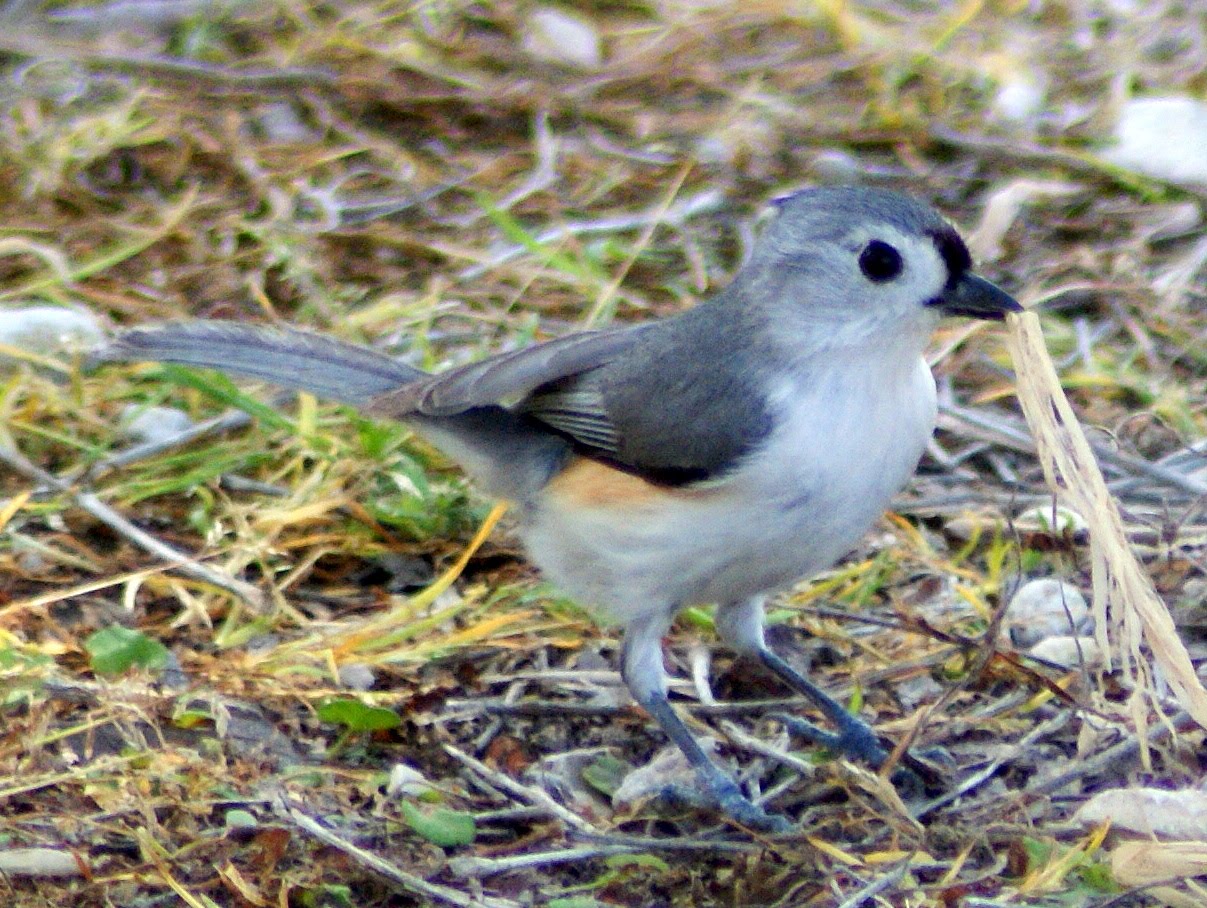
Tufted Titmouse


12.


Cattle Egret


Scores
11-12 Very Good
9-10 Good
7-8 Okay
1-6 You'd better work on those ID skills!


So, how did you do?

.

Monday, May 17, 2010

Old and New

.
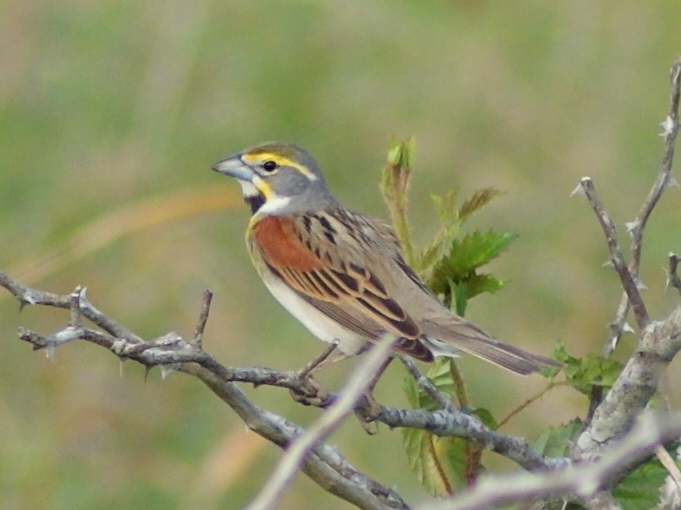
When I managed to take a few hours' comp time to do some birding, I decided to drive over to the Attwater Prairie Chicken Refuge, some 60 miles west of Houston. My main aim was to look for Northern Bobwhites, birds I have seen only a few times and which I've never been able to get a good photo of. I though, too, that I might get some photos of Dickcissels, another species that I don't often see but that is common at Attwater.

Sure enough, the entrance road was lined with a dozen Dickcissels. However, they either disappeared as soon as I stopped the car or else were perched too far away for good photos. Scissor-tailed Flycatchers were much more obliging.


The entrance road also had a Crested Caracara, another very common bird at this refuge.


On the auto-loop, there were black butterflies everywhere.


Birds were rare except for Mourning Doves, Red-winged Blackbirds, more Caracaras and a beautiful White-tailed Hawk.


And except for Dickcissels. There were scores of them.

I enjoyed watching them ...


and listening to their "dick-dick-dickcissel" songs.


But after 25 minutes I was ready for something different - and preferably a Northern Bobwhite.

Right on cue, a pair hopped out of a
hedge and started walking down the road ahead of me. As soon as I stopped the car, they took fright and disappeared back into the hedge. But not before I got a photo.


Now that my mission was accomplished, I left the refuge and headed back towards Houston. On the way, I stopped to explore Stephen F Austin Park, a site I'd never visited before. I had a pleasant walk along the Cottonwood Trail, which was busy with common birds and lots of butterflies.


A pair of Red-shouldered Hawks flew off before I could get a good look at them. Then a male Cardinal flew up from the path, followed by another bird that I didn't get a look at. I assumed it was probably a female Cardinal but I thought I'd check it out just in case. I'm glad I did. When I located the bird, it was actually a Yellow-billed Cuckoo.


The Bobwhite and Cuckoo took my year list to 206 species.
.

Friday, May 14, 2010

This Week at CyFair

.
It has been a fairly quiet week on the 9191 Barker Cypress Road campus. The only new bird I saw was a Black-throated Green Warbler, one of just a handful of spring migrants that have visited this year.

I was worried that our spring-resident Western Kingbirds might take fright at all the construction work going on around the campus. However, they seem to be unconcerned by the noise and by the presence of heavy earth-moving equipment.


On Wednesday I saw that one pair of Kingbirds has already nested under the northeastern corner of the basketball court roof. This makes six years in a row that the pair has nested under this roof. At present it's hard to get a good look at the nest and the bird on it.


I'm looking forward to next month,
when the fledglings start exploring the roof beams and then move down to the small pine trees nearby.

Elsewhere on the campus, other birds have nested above the cafeteria doorway. There seems to b
e only one baby in this nest but he/she certainly makes a lot of noise.


I wasn't sure what species it was until I saw a parent fly in to feed the youngster.


European Starling. I should have known. Not many birds except Starlings and House Sparrows would be cheeky enough to raise their young 3 feet above a doorway used by thousands of people every day.


The only other sighting of note was a snake that turned up on the nature trail. I'm no expert on snakes but it looks to me like a Rough Green Snake.


P.S.
Tomorrow morning I am taking part in a census of Greater Roadrunners north of FM2920. I'll be listening and watching for Roadrunners along Roberts Cemetery Road, just northwest of Kleb Woods. They saw a Roadrunner at Kleb on Wednesday but I have never seen one anywhere in our area.
.