Monday, January 07, 2013

More Winter Birds Arrive

.
We've had a few winter residents in our yards for several weeks - Rufous Hummingbird, Ruby-crowned Kinglet, Yellow-bellied Sapsucker, Yellow-rumped Warblers, Orange-crowned Warblers, Red-breasted Nuthatches (below), 2-3 American Goldfinches and a solitary Chipping Sparrow (below). However, the range and number of winter birds has been rather disappointing. Until yesterday, that is.


I looked out of our living-room window at 9:30 yesterday morning to find a score of American Goldfinches on our various feeders, and more waiting in line.


It wasn't long before I spotted what I had been hoping for since our return from the UK - a Pine Siskin. At least three were mixed in with the Goldfinches on our platform feeder.


A few minutes later I saw that several Pine Warblers had joined the Goldfinches at our front yard feeders. 


I was equally pleased to see the return of a pair of Northern Cardinals, birds we have hardly seen in our yards since the summer.


I was less pleased to see that the activity at our feeders attracted the attention of some White-winged Doves and, inevitably, a bunch of House Sparrows.


Whenever there was a lull in the activity, our Ruby-crowned Kinglet would sneak in and grab some suet.


While I was taking photos of the Kinglet, I kept catching glimpses out of the corner of my eye of another small bird that was making quick visits to a nearby seed feeder. A Carolina Chickadee, I assumed. But then the bird stayed long enough at the feeder for me to focus on it. A Brown-headed Nuthatch!


Brown-headed Nuthatches are fairly common just north of our area, in Kleb Woods and in Tomball's Spring Creek Park but this is the first one that we've ever seen in our yards. Now if a White-breasted Nuthatch would visit our feeders ...
.  

Friday, January 04, 2013

Owls

.
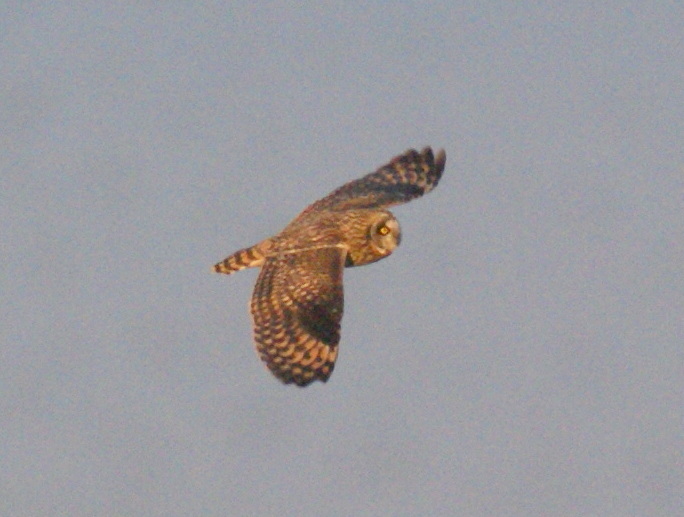
There was a lot of excitement last month when three Short-eared Owls were spotted on Longenbaugh West Road on the Katy Prairie. Within a few days it seemed that every local birder had seen the birds. Every local birder except me, that is. I made three early morning trips to the site but didn't see any of the owls.

Then another pair of Short-eared Owls turned up a couple of miles further east, on Porter Road. I tried again. This time, after a couple of unsuccessful trips, I finally managed to see one of the birds - but only for a few seconds, and at a distance, and in near darkness. Not very satisfying!

Yesterday morning I went back to Porter Road in hopes of getting a better look. I arrived at 7:20 and immediately spotted one of the owls scouring a field west of the road. The second owl appeared and I watched for several minutes as the pair crisscrossed the field. I was thrilled to get some reasonably clear photos.


One thing that surprised me was the length of the owls' wings.


As I watched over the next 15 minutes, every so often the two birds would fly directly towards each other. Then, just when they looked certain to crash into each other, they would both switch into a steep climb and then stop, to hang in the air for a moment, face to face and only a foot or two apart. Quite a sight!


After 25 minutes of watching the owls, they moved away to the far side of the field and I decided it was time for me to go to work. I got in my car and started to leave. However, I had driven only a few yards when I noticed that one of the owls was now heading back my way. I leaped out of the car and took more photos as the bird flew past me, crossed the road and started scouring the opposite field.


It just goes to show that, where birding is concerned, if at first you don't succeed, try again - and again - and again - and ...
.
Wednesday, January 02, 2013

Happy New Year

.
New Year's Day in Cypress was much like every day we spent in London over Christmas - cold, dark and wet. So I decided to restrict my birding to watching the feeders in our back yard from our living-room window.

Our first visitor of the year was our most loyal resident, a Northern Mockingbird.


Minutes later I was pleased to see that the Red-breasted Nuthatches that appeared last month were still around.


I was even more pleased to see that the male Rufous Hummingbird which also moved in last month was still here, too.


A third winter visitor, an Orange-crowned Warbler soon put in an appearance.


Then a pair of American Goldfinches turned up.


After that, the Warbler and the Nuthatch made frequent trips to our suet feeder, sometimes separately and sometimes together. 


As the morning progressed, our resident Carolina Chickadees commenced their regular runs to and from our seed feeder.


The biggest surprise of the day was the absence of our other resident birds - Northern Cardinals, Blue Jays, White-winged Doves, Carolina Wrens, Red-bellied Woodpeckers and Downy Woodpeckers. However, I did get a brief glimpse of four House Sparrows later in the day.

My final sighting, when the light was too low for photography, was of a solitary Yellow-rumped Warbler.
.

Friday, December 28, 2012

London at Christmas

.
"The weather outside is frightful". The words of the Christmas song say it all . It has rained almost all day of every one of the ten days that we've been in London.  This hasn't put a damper on our holiday festivities but it has meant that my birding here has been limited to looking out for birds while taking brief walks in local parks and watching birds in the garden of the house where we're staying.

The main garden visitors have been those two most English of all birds, a Blackbird and a Robin.


Long-tailed Tits, Blue Tits and a Goldcrest have made brief appearances in weather too bad for photographs while Carrion Crows have perched on nearby rooftops and trees and Black-headed Gulls have wheeled ceaselessly around in the sky overhead.

A walk in Clissold Park turned up more Carrion Crows and Blackbirds.


I always enjoy visiting the ponds in Clissold Park because they have a range of water birds that are so used to people that they are easy to photograph. Coots and Moorhens abound.


Although Mallards are the most common ducks, there are plenty of Pochards - the males with bright orange eyes - and Tufted Ducks, too.


A Little Grebe proved too elusive to photograph but Black-headed Gulls were another story.


The Stoke Newington reservoirs and Abney Park graveyard produced several more bird species, but I'll leave reporting on those for another day.   
.

Friday, December 21, 2012

The Katy Prairie in December

.
Last week I took my last drive of the year  onto the Katy Prairie.

A Ferruginous Hawk was still hanging out along Longenbaugh.


Red-tailed Hawks were everywhere.


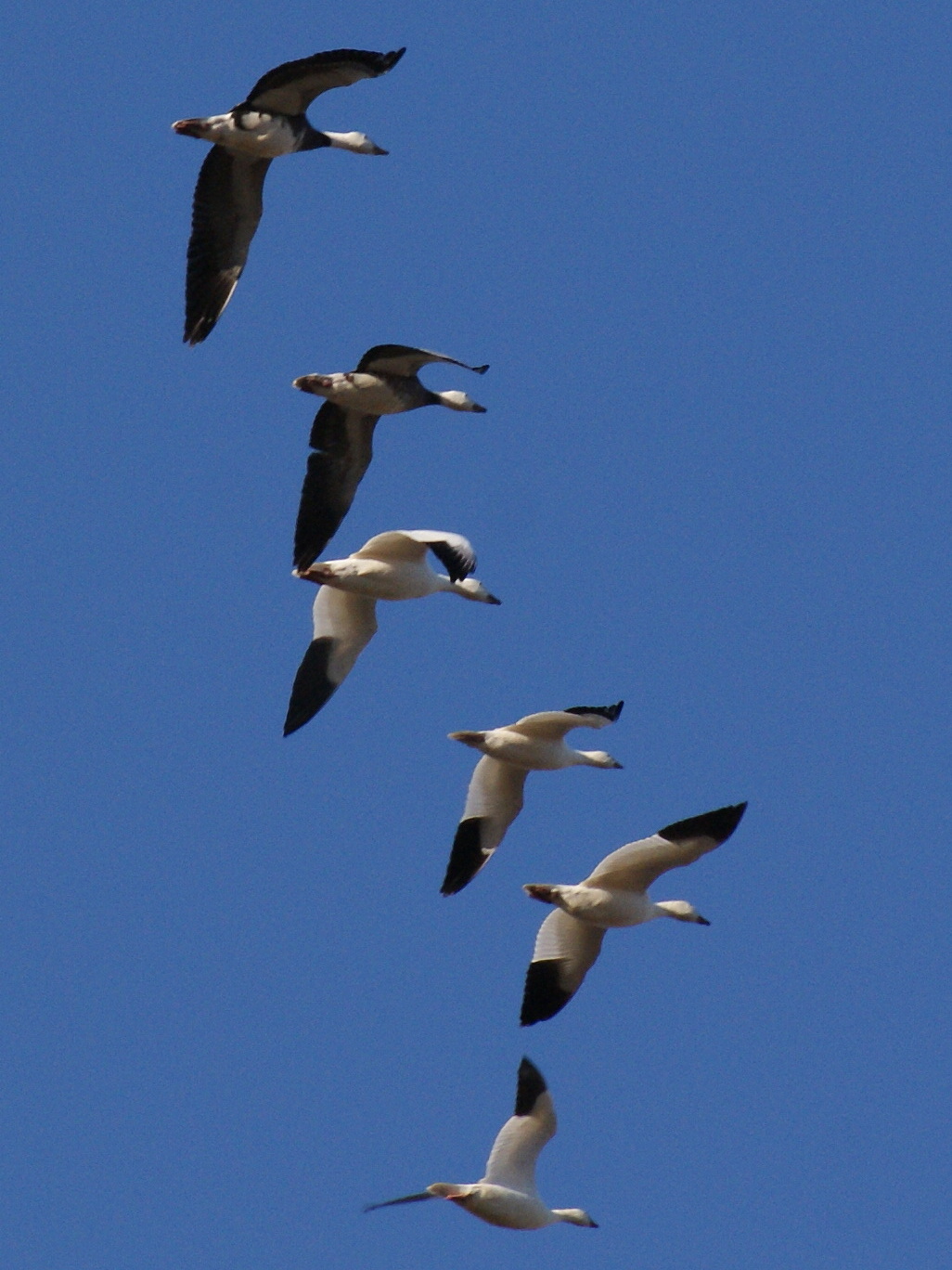
Several skeins of hundreds of Snow Geese passed overhead.


Three times the road ahead was blocked by Black Vultures.


As usual, Crested Caracaras perched on utility poles by the roadside.


There were plenty of smaller birds, too, including Northern Mockingbirds, Eastern Meadowlarks and Red-winged Blackbirds.


At Warren Lake I was so surprised to see a flock of 60 White Pelicans that I initially didn't notice the edge of the lake was hosting hundreds of Greater White-fronted Geese.


The Geese noticed me, though, and they filled the sky over the lake as they lifted off and flew to safety.


As we're in the UK for the holidays, it'll be January before I get another chance to check out the bird situation on the prairie.  Hopefully, more winter birds will have turned up by then!
.

Wednesday, December 19, 2012

(Almost) Wordless Wednesday

.
Black-bellied Whistling Ducks fly over the CyFair Campus.


A Red-breasted Nuthatch visits one of our suet feeders.


.