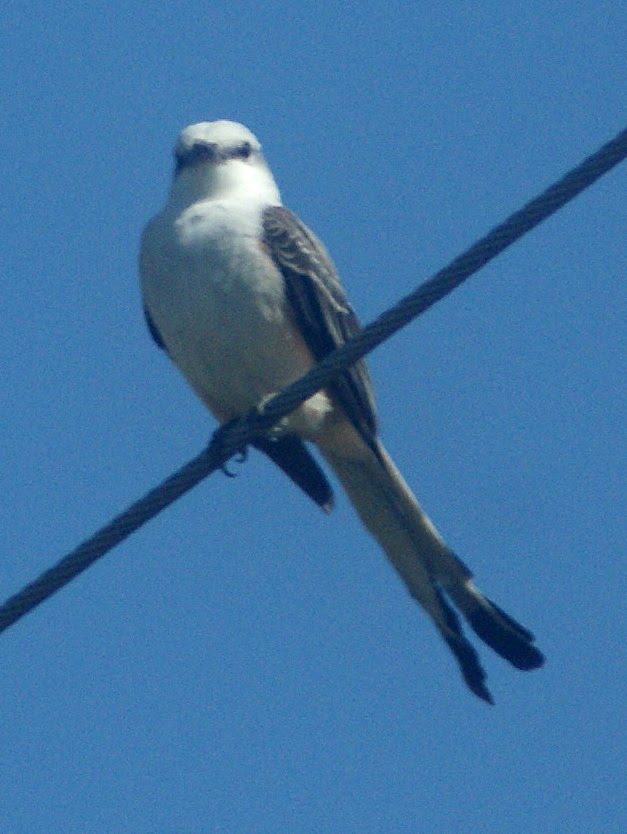
.One of the things I love about living and working where I do is that I only have to extend my commute a little to cut across part of the Katy Prairie. I did this on my way home yesterday, because I wanted to see if Scissor-tailed Flycatchers had returned.I stopped in for a few minutes at Paul Rushing Park in hopes of getting a photo of one of the American Golden Plovers that have been hanging out there. They're very skittish birds but I did manage a couple of so-so photos.
 While I was in the park, I checked out the Dowitchers again. This time I heard their call and it settled the ID issue I had the other day: They are Short-billed Dowitchers.
 There were plenty of other birds on the grassy areas of the park: Wilson's Snipes, Killdeer, Greater Yellowlegs, a Willet, Spotted Sandpipers, Blue-winged Teal, Savannah Sparrows, American Pipits and Horned Larks. I was surprised when I checked out a flock of 150 European Starlings and discovered they were actually Brown-headed Cowbirds. That's a bird I don't see very often, although I had noticed a single male on the CyFair campus earlier in the day.
 Back on the road home, I noticed that Red-tailed Hawks are now lower in numbers than they were all winter. I saw only three.
Becker Road just south of 290 is usually a reliable place for spotting Scissor-tailed Flycatchers and it turned up trumps again yesterday. Three of the birds were sitting on utility wires. The only photos I was able to take were rather murky ones through the windshield.
 Here's a much better picture that I took at Sheldon Lake last May.

I love Scissor-tailed Flycatchers. I still remember the thrill I got from seeing one for the very first time on my very first day in Texas 8 years ago..
.
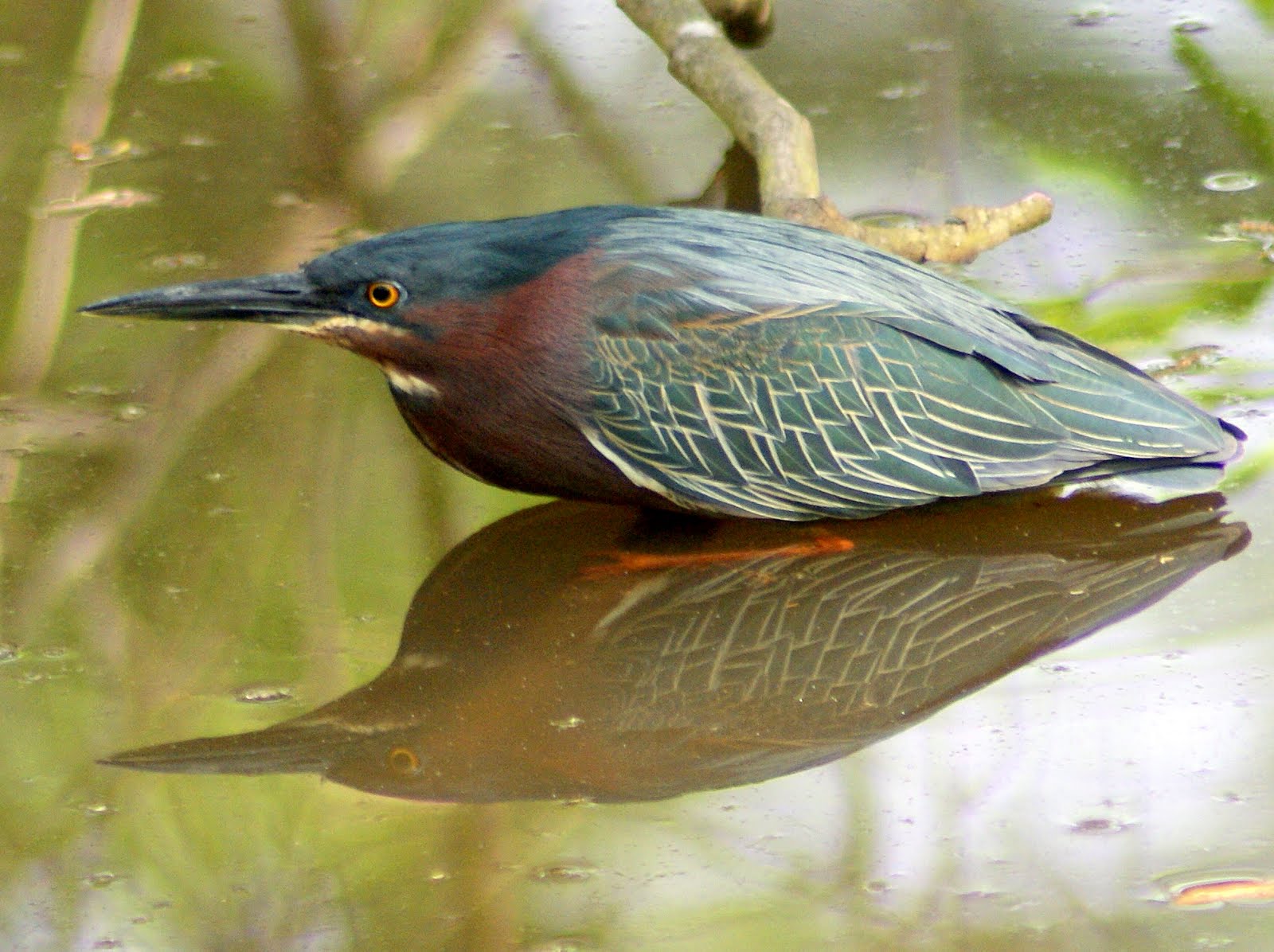
Late Saturday morning we went to the Edith L Moore Nature Sanctuary in west Houston. On a good spring day - which Saturday was - there is no prettier place to visit. Plus there is the added bonus of an opportunity to see spring migrant songbirds. At the pond near the cabin, we had very good views of a Green Heron, standing absolutely motionless in the water.

 The pond had Red-eared Sliders, too. These tend to be very skittish critters but the ones at Edith Moore are so used to people that they let you get very close.
 Until the last few minutes of our walk, we saw very few birds: a dozen Cedar Waxwings, some Ruby-crowned Kinglets, several Yellow-rumped Warblers and a single White-eyed Vireo. (The latter was year bird #144 for me.) However, we did see our first Monarch butterfly of 2010.
 Then we came across a small pond in a clearing that was hopping with birds. First up was a Black-and-white Warbler that was scuttling around in the leaves by the water's edge.
 Then we were lucky enough to spend 10 minutes watching a pair of Hooded Warblers bathing in a tiny puddle among the leaves. The lighting was terrible but I managed to get a recognizable shot of one of the bathers.
 A couple of Yellow-rumped Warblers tried to get in on the sene and the activity also brought in a Northern Parula. Like the Hooded Warblers, this was another new year bird. Back at the cabin, the feeders were drawing in common yardbirds, including a striking orange-variant male House Finch. The final treat was watching a Tufted Titmouse feeding a youngster.
 Weekly Birdwalks
If you live in Houston, you should really try to get over to Edith Moore during the next few weeks. A good time to go would be for one of the weekly birdwalks (Wednesdays at 8:30 from April 7th) which Jim Hinson leads every spring.
.
.
In my last post, I commented that I still have problems with identifying shorebirds. This became clear again on Thursday, when I popped in at Paul Rushing Chain-of-Lakes Park on the Katy prairie on my way to work. The first shorebirds I spotted were American Golden Plovers, too far away for photos but easy to ID through binoculars.
The next birds up were even easier to identify: Nothing else looks even vaguely like a Black-necked Stilt!

 I felt fairly secure, too, in identifying these birds as Greater Yellowlegs.

 Then the problems started. I spotted a host of Long-billed Dowitchers. Or were they Short-billed Dowitchers? They were quiet when feeding, which Sibley says is a feature of Short-billed Dowitchers. On the other hand, these birds were on grass and Sibley says Short-billed favor beaches rather than grassy areas. Also, the secondary wing feathers looked too dark to be Short-billed. So they must be Long-billed, right? But the tail on these birds looked too pale for Long-billed.

 As I often do when stumped by birds, I've now posted photos on Birdforum and asked for help. I'll let you know what people think.
.
P.S.
Most people on BirdForum seemed to think the Dowitchers were Short-billed. However, some people weren't so sure!
.
. .
.