.
My final stop in Colorado was Cherry Creek State Park in Denver.
I didn't have time to explore any of the stands of trees but contented myself with a walk partway around the large lake.
Ring-billed Gulls were busy - and noisy - overhead.
There were Canada Geese on the opposite side of the water but on my side the only geese or ducks were a few Mallards.
Several Double-crested Cormorants were fishing for their supper.
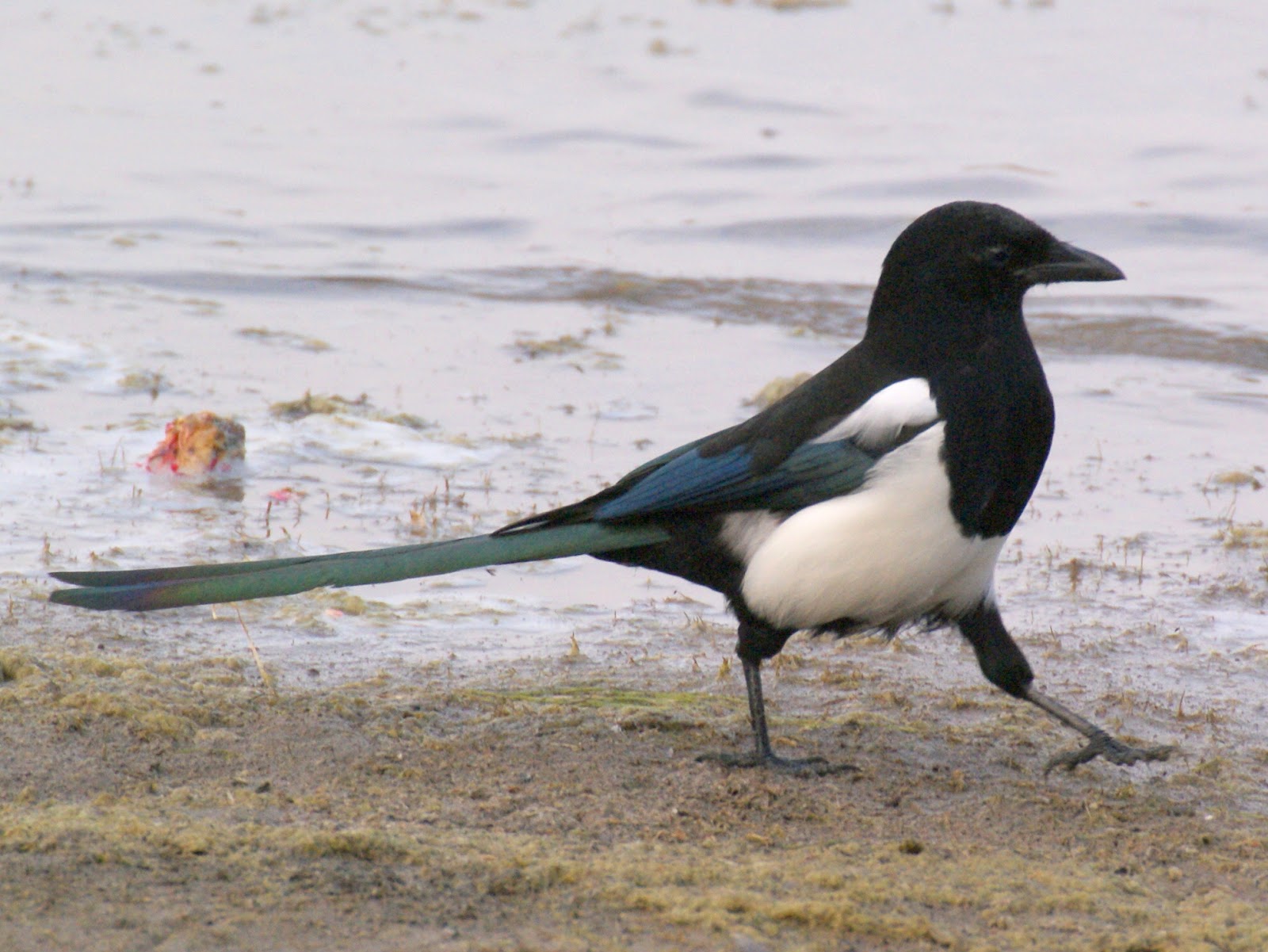
I finally got to take a couple of photos of some Black-billed Magpies, a species that I had seen at every site I had visited in Colorado.
As I was driving out of the park, I came across a pretty little wetland area. A couple of Vesper Sparrows were in the reeds and a Northern Pintail (that I originally thought was a Blue-winged Teal!) flew off at my approach.
Overall, my visit to Colorado was very disappointing in terms of the number and variety of birds I had seen. However, the landscape was beautiful and I saw quite a few mammals, so the trip wasn't a total write-off!
.
Jeff Mohamed blogs about birds and other wildlife in the Houston area - and occasionally farther afield.
Showing posts with label birding trip. Show all posts
Tuesday, October 02, 2012
Sunday, September 30, 2012
Denver Trip (2): Rocky Mountain Arsenal
.
After a less-than-spectacular couple of hours birding at Barr Lake, I headed over to the Rocky Mountain Arsenal refuge.
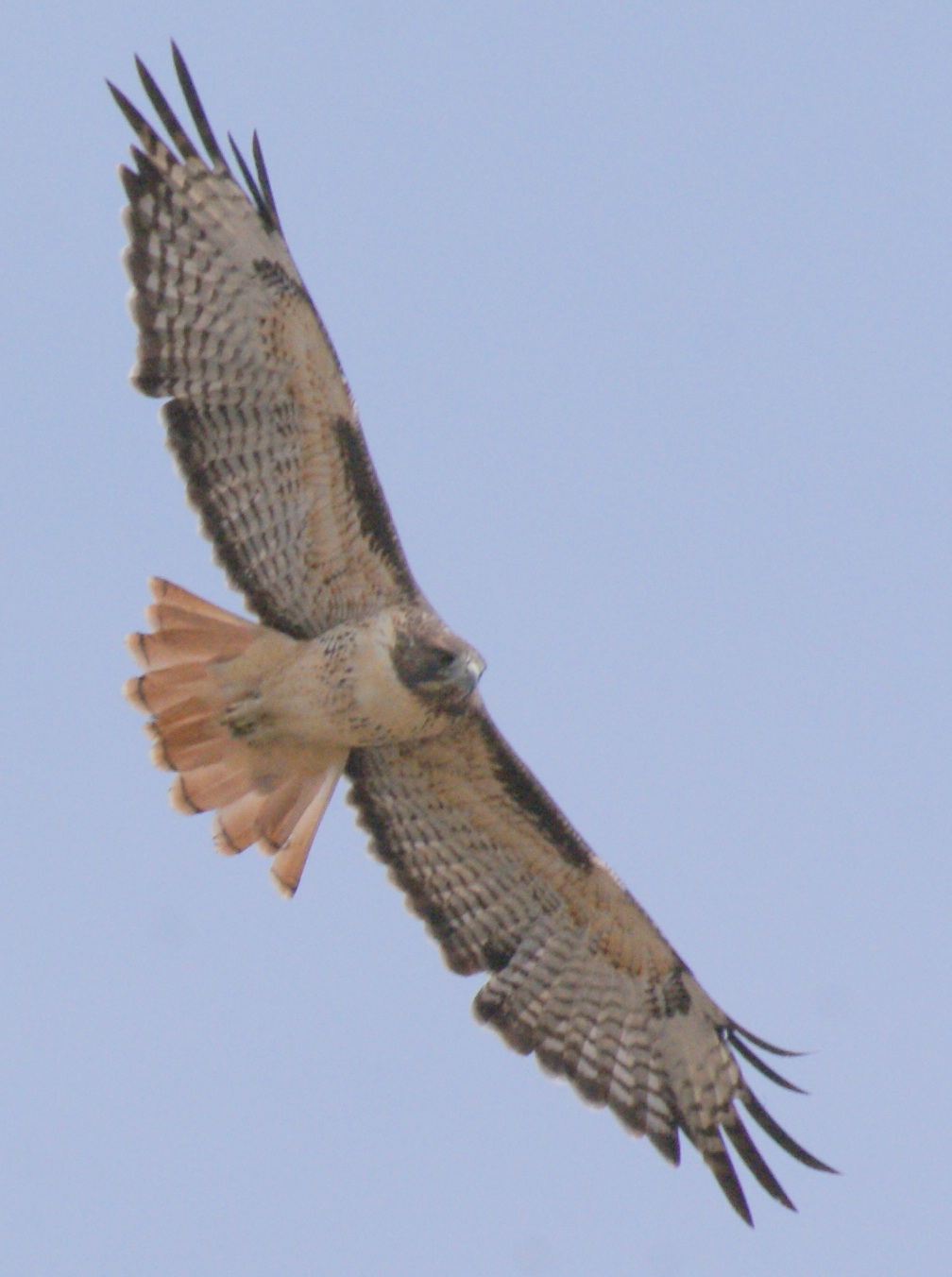
On my way I passed a magnificent Red-tailed Hawk.
The RM Arsenal refuge was remarkably quiet for birds except for Ladora Lake. This had a pair of Western Grebes, a score of American Coots and several Double-crested Cormorants (below).
The edges of the lake had a few Dark-eyed Juncoes and a flock of 20 or more Chipping Sparrows (below).
I examined prairie dog burrows and mounds carefully in hopes of seeing one that had been taken over by Burrowing Owls.
However, for the fourth year in a row at this site I failed to spot any owls!
.
After a less-than-spectacular couple of hours birding at Barr Lake, I headed over to the Rocky Mountain Arsenal refuge.
On my way I passed a magnificent Red-tailed Hawk.
The RM Arsenal refuge was remarkably quiet for birds except for Ladora Lake. This had a pair of Western Grebes, a score of American Coots and several Double-crested Cormorants (below).
The edges of the lake had a few Dark-eyed Juncoes and a flock of 20 or more Chipping Sparrows (below).
I examined prairie dog burrows and mounds carefully in hopes of seeing one that had been taken over by Burrowing Owls.
However, for the fourth year in a row at this site I failed to spot any owls!
.
Friday, September 28, 2012
Denver Trip (1)
.
Sunday morning I was up and on the road before dawn, driving to Rocky Mountain National Park. This time I wasn't intending to visit the park itself but just to do a little birding around the Beaver Meadows Visitor Center.
The landscape was beautiful and I shared the Center's grounds with a family of white-tailed deer.
Unfortunately, though, there were no birds except a Pygmy Nuthatch and several Black-billed Magpies. So I drove back south and spent a couple of hours at Barr Lake State Park, where I was hoping to see a range of shorebirds and waterbirds.
My luck wasn't very good, because most of the lake and the surrounding marshlands were bone dry. I could see hundreds of Canada Geese and gulls near the remaining stretch of water, plus 30-40 White Pelicans, but all were too far away for photos, as were a Bald Eagle, a Swainson's Hawk and five Sandhill Cranes. As I walked back to my car to drive over nearer to the water, I saw a few other birds - a White-breasted Nuthatch, a Gray Catbird and six Northern Flickers.
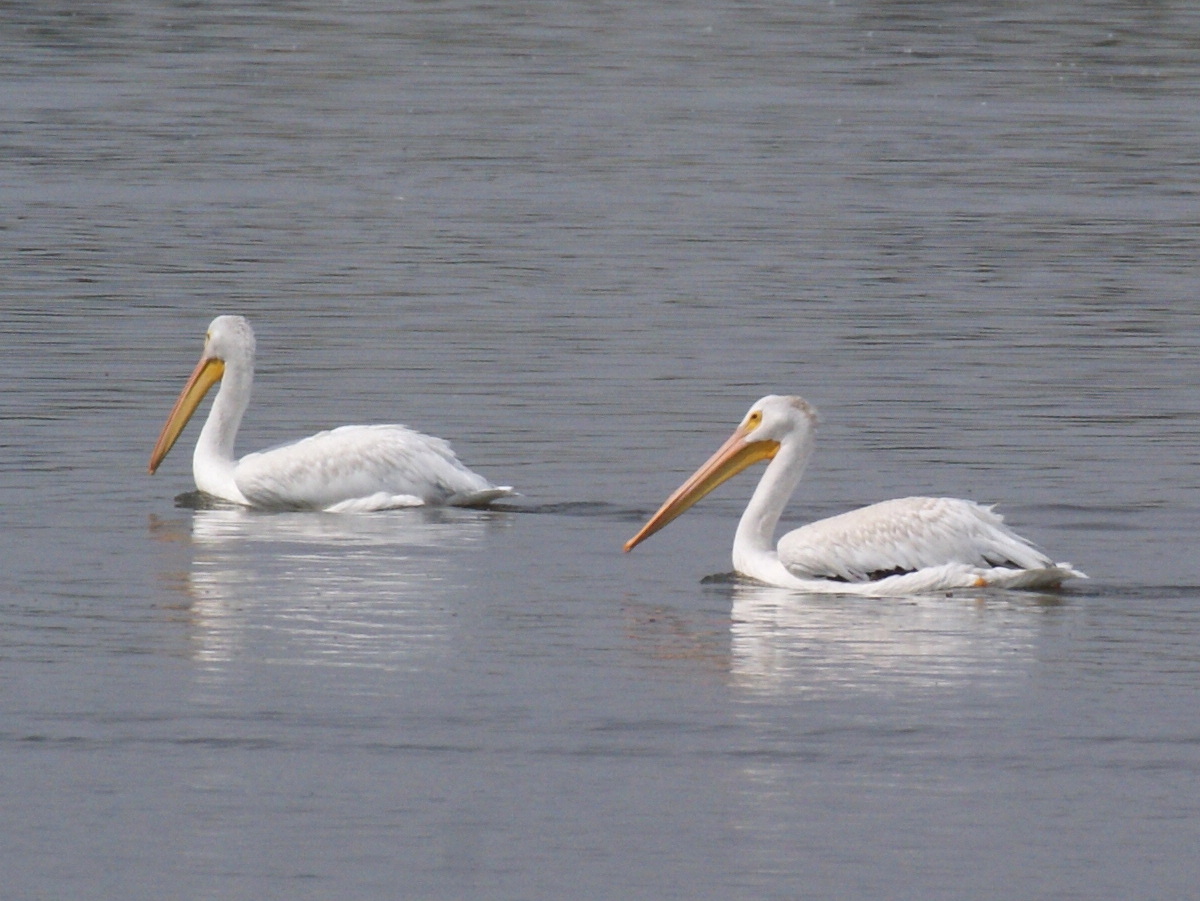
Arriving at the water's edge, I enjoyed watching White Pelicans glide by.
A Great Blue Heron was fishing nearby - the only heron or egret that I saw on my trip.
Franklin's and California Gulls were resting on sandbars while Ring-billed Gulls zoomed around overhead.
Finally I spotted one of the birds I had hoped to see during my Denver trip - a Western Grebe.
So far my morning's birding hadn't gone at all well. Was the rest of the day going to be equally disappointing or would my luck change?
.
Sunday morning I was up and on the road before dawn, driving to Rocky Mountain National Park. This time I wasn't intending to visit the park itself but just to do a little birding around the Beaver Meadows Visitor Center.
The landscape was beautiful and I shared the Center's grounds with a family of white-tailed deer.
Unfortunately, though, there were no birds except a Pygmy Nuthatch and several Black-billed Magpies. So I drove back south and spent a couple of hours at Barr Lake State Park, where I was hoping to see a range of shorebirds and waterbirds.
My luck wasn't very good, because most of the lake and the surrounding marshlands were bone dry. I could see hundreds of Canada Geese and gulls near the remaining stretch of water, plus 30-40 White Pelicans, but all were too far away for photos, as were a Bald Eagle, a Swainson's Hawk and five Sandhill Cranes. As I walked back to my car to drive over nearer to the water, I saw a few other birds - a White-breasted Nuthatch, a Gray Catbird and six Northern Flickers.
Arriving at the water's edge, I enjoyed watching White Pelicans glide by.
A Great Blue Heron was fishing nearby - the only heron or egret that I saw on my trip.
Franklin's and California Gulls were resting on sandbars while Ring-billed Gulls zoomed around overhead.
Finally I spotted one of the birds I had hoped to see during my Denver trip - a Western Grebe.
So far my morning's birding hadn't gone at all well. Was the rest of the day going to be equally disappointing or would my luck change?
.
Saturday, September 22, 2012
Early Morning at Anahuac NWR
.
After our visit to Rollover Pass we spent the night in Winnie. Sunday morning I was up before dawn to do some early morning birding at Anahuac. I like early morning birding - though I don't get to do it much - because I find the birds are generally more relaxed and are more tolerant of my presence. The only downside is that dim lighting makes taking clear photos more difficult.
The first birds I spotted on my drive around Shovelers' Pond were juvenile Yellow-crowned and Black-crowned Night Herons.
Green Herons were out and about, too.
A couple of hundred Ibis were flying around or wading in the marshy areas. Some where adult White Ibis.
There were also a few Glossy Ibis and several White-faced ones.
Tricolored Herons and Black-necked Stilts were everywhere.
All of them were having to keep an eye out for alligators.
Most of the Whistling Ducks I could see were Fulvous rather than Black-bellied.
As on the previous day, I saw many adult and young Common Gallinules (formerly Moorhens).
This time, though, I also caught glimpses of a couple of Purple Gallinules.
There were at least 5 Least Bitterns, too, but I didn't manage to get photos of them.
In contrast, this Northern Mockingbird seemed happy to let me photograph it.
As I was leaving, numerous male Red-winged Blackbirds were perching, singing and displaying.
Eastern Kingbirds and Scissor-tailed Flycatchers were on the utility wires lining the entrance/exit road but they were sharing the wires with at least two Olive-sided Flycatchers.
So a short visit to Anahuac had once again provided lots of interesting sightings. That's why it's one of my favorite birding sites, particularly now that it has more or less fully recovered from the effects of Hurricane Ike.
.
After our visit to Rollover Pass we spent the night in Winnie. Sunday morning I was up before dawn to do some early morning birding at Anahuac. I like early morning birding - though I don't get to do it much - because I find the birds are generally more relaxed and are more tolerant of my presence. The only downside is that dim lighting makes taking clear photos more difficult.
The first birds I spotted on my drive around Shovelers' Pond were juvenile Yellow-crowned and Black-crowned Night Herons.
Green Herons were out and about, too.
Great Egrets usually fly off when you approach but this one was so relaxed that I was able to take photos from 7-8 feet away.
A couple of hundred Ibis were flying around or wading in the marshy areas. Some where adult White Ibis.
There were also a few Glossy Ibis and several White-faced ones.
Snowy Egrets were common, looking splendid in the early sunlight.
All of them were having to keep an eye out for alligators.
Most of the Whistling Ducks I could see were Fulvous rather than Black-bellied.
As on the previous day, I saw many adult and young Common Gallinules (formerly Moorhens).
This time, though, I also caught glimpses of a couple of Purple Gallinules.
There were at least 5 Least Bitterns, too, but I didn't manage to get photos of them.
In contrast, this Northern Mockingbird seemed happy to let me photograph it.
As I was leaving, numerous male Red-winged Blackbirds were perching, singing and displaying.
Eastern Kingbirds and Scissor-tailed Flycatchers were on the utility wires lining the entrance/exit road but they were sharing the wires with at least two Olive-sided Flycatchers.
So a short visit to Anahuac had once again provided lots of interesting sightings. That's why it's one of my favorite birding sites, particularly now that it has more or less fully recovered from the effects of Hurricane Ike.
.
Wednesday, September 19, 2012
Bolivar (2)
.
Many of the shorebirds at Rollover Pass are far enough away that they are best viewed through binoculars. When we were there, this was the cae with some small groups of Dowitchers, for example. However, many others were scouring the area near where we had our picnic and some of them seemed to forget about our presence after a while.
That was the case with a couple of Ruddy Turnstones, a Yellowlegs and a Marbled Godwit.
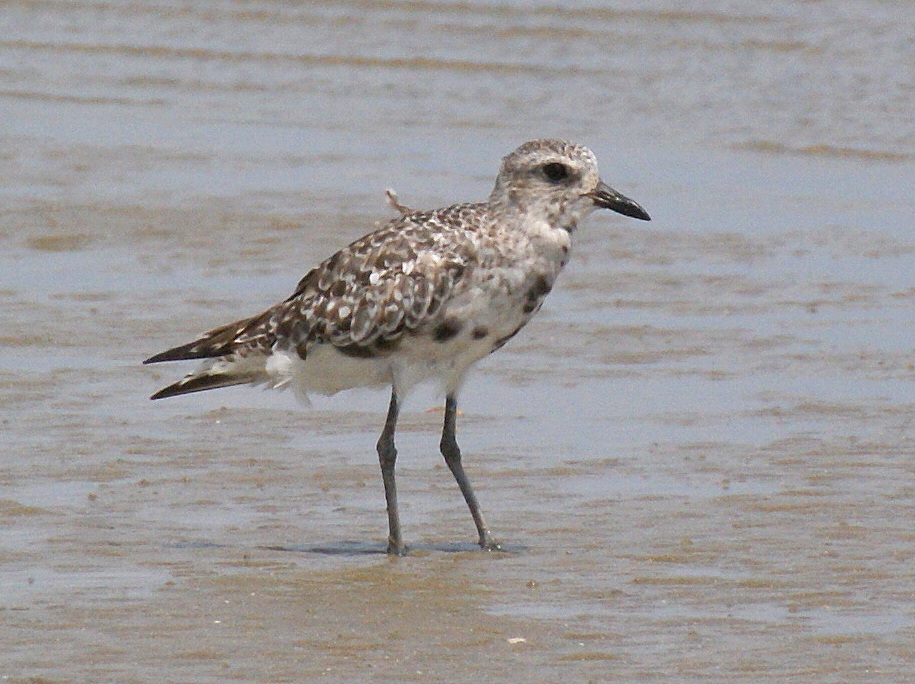
Most of the Black-bellied Plovers were more shy and stayed well away from us.
I was surprised not to see any Long-billed Curlews on this visit. There were two Whimbrels, though, a species that is less common and that I never tire of watching. One of them was hunting in the shallows but kept stopping to deal with a persistent itch on its neck.
Many of the shorebirds at Rollover Pass are far enough away that they are best viewed through binoculars. When we were there, this was the cae with some small groups of Dowitchers, for example. However, many others were scouring the area near where we had our picnic and some of them seemed to forget about our presence after a while.
That was the case with a couple of Ruddy Turnstones, a Yellowlegs and a Marbled Godwit.
Most of the Black-bellied Plovers were more shy and stayed well away from us.
I was surprised not to see any Long-billed Curlews on this visit. There were two Whimbrels, though, a species that is less common and that I never tire of watching. One of them was hunting in the shallows but kept stopping to deal with a persistent itch on its neck.
The other Whimbrel was exploring the sand near the water's edge and seemed to be having more success.
.
Subscribe to:
Posts (Atom)